The material decides
- The seams. On items meant to seam, they show by design.
- The tone, which shifts from strip to strip.
- The instructions: the adhesive, the hanging method, and the room conditions before, during, and after installation.
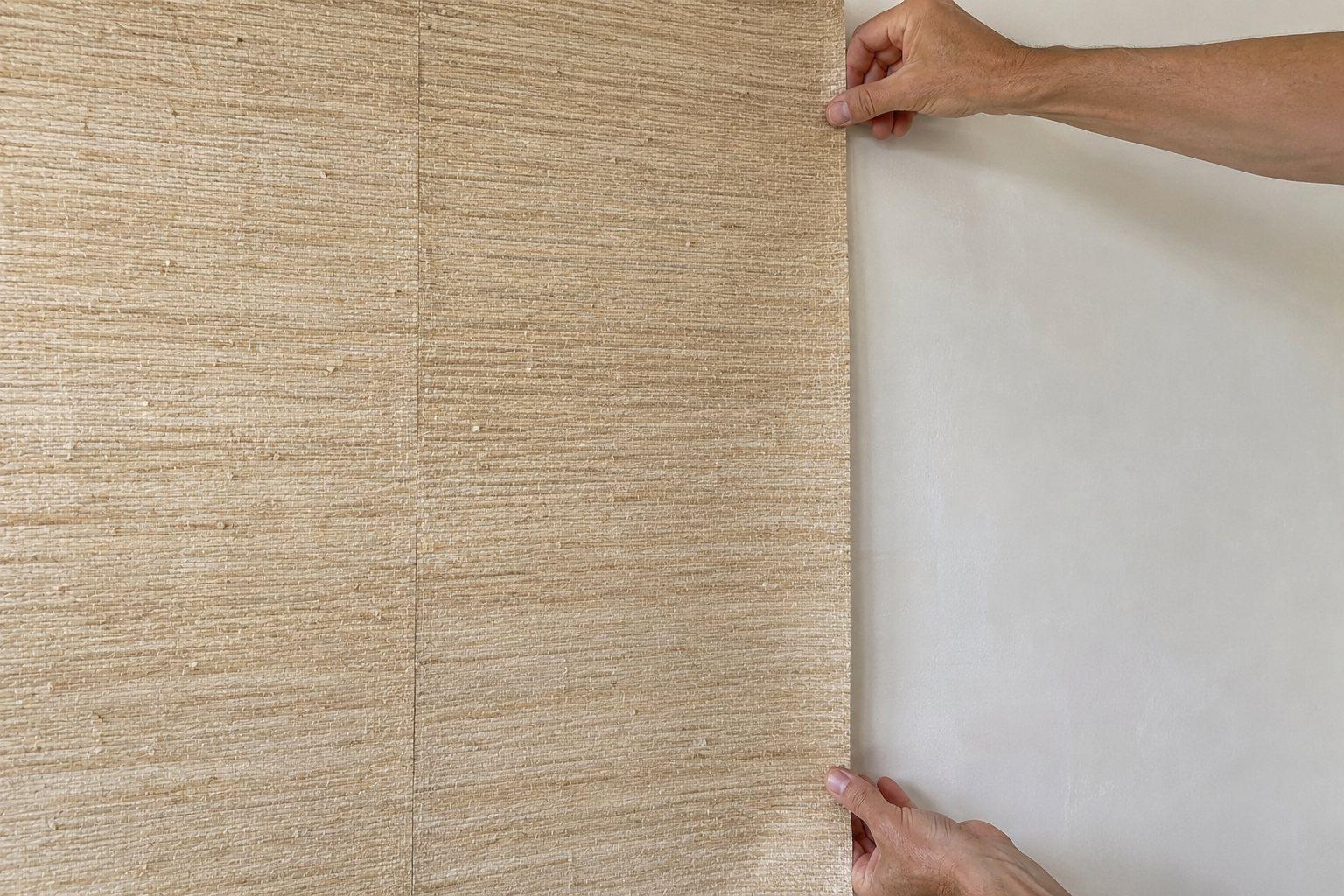
Grasscloth is a natural material, and it looks like one. You’ll see where the strips meet, and the tone can shift from one strip to the next. We plan for both before the first cut.
Then we prepare the wall and hang each strip by hand, working from the instructions for the exact item you’ve chosen.
Seams
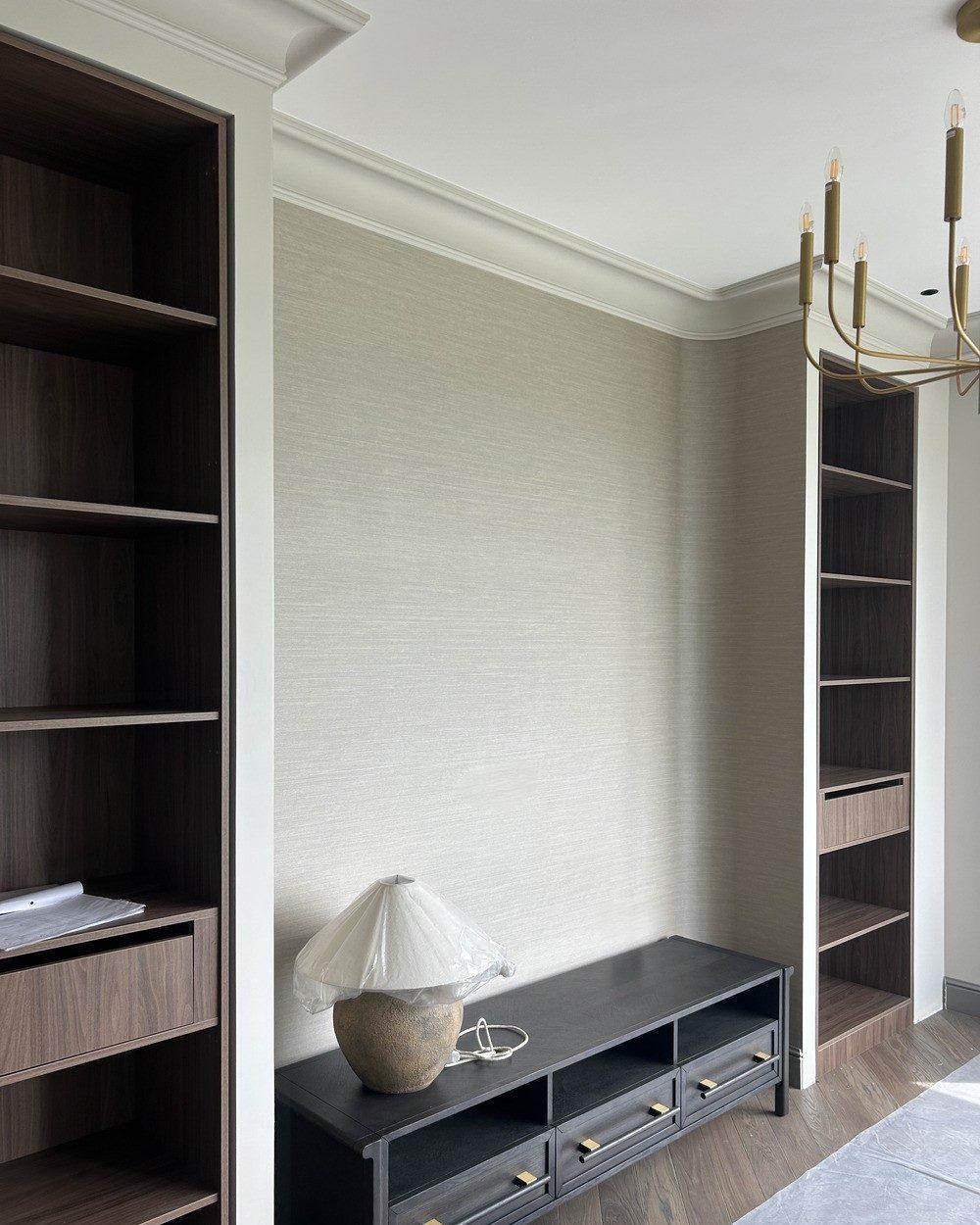
Yes. With grasscloth, you’ll see where two strips meet. That’s how the material is made, not a fault in the hanging. One manufacturer describes it as a paneled effect: on items meant to seam, the seams are intentionally visible between strips.
If you’ve been looking for grasscloth without seams, we’d rather say it now than after the room is finished. The seams are part of the look. What we control is where they fall and how cleanly they meet.
Before we cut, we plan the seams with you: where the first strip goes, how the seams sit around windows, doors, and the main view into the room, and which corner takes the last strip. You approve the plan before we start.
Shading
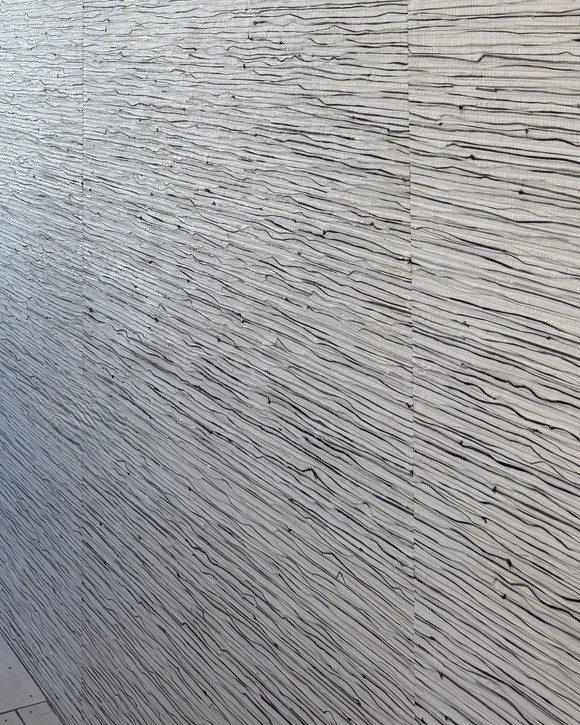
Not the way a printed pattern does. Plain grasscloth has no printed design to carry across the seam, so there’s nothing to match in that sense. What you notice at a seam is the texture and the tone on either side of it.
Neighboring strips can differ in tone. The trade calls this shading, and it belongs to the natural fibers. One technique for material that shades is reverse hanging: turning every other strip upside down. Some manufacturers describe it as common with material that shades. We read the instructions for your item before we decide whether to use it.
Rolls are labeled with a run, batch, or dye lot number. Rolls from different runs can differ slightly in color, sometimes only when they are laid side by side. Before cutting, we check that every roll for the job carries the same run or batch number.
Who Controls What
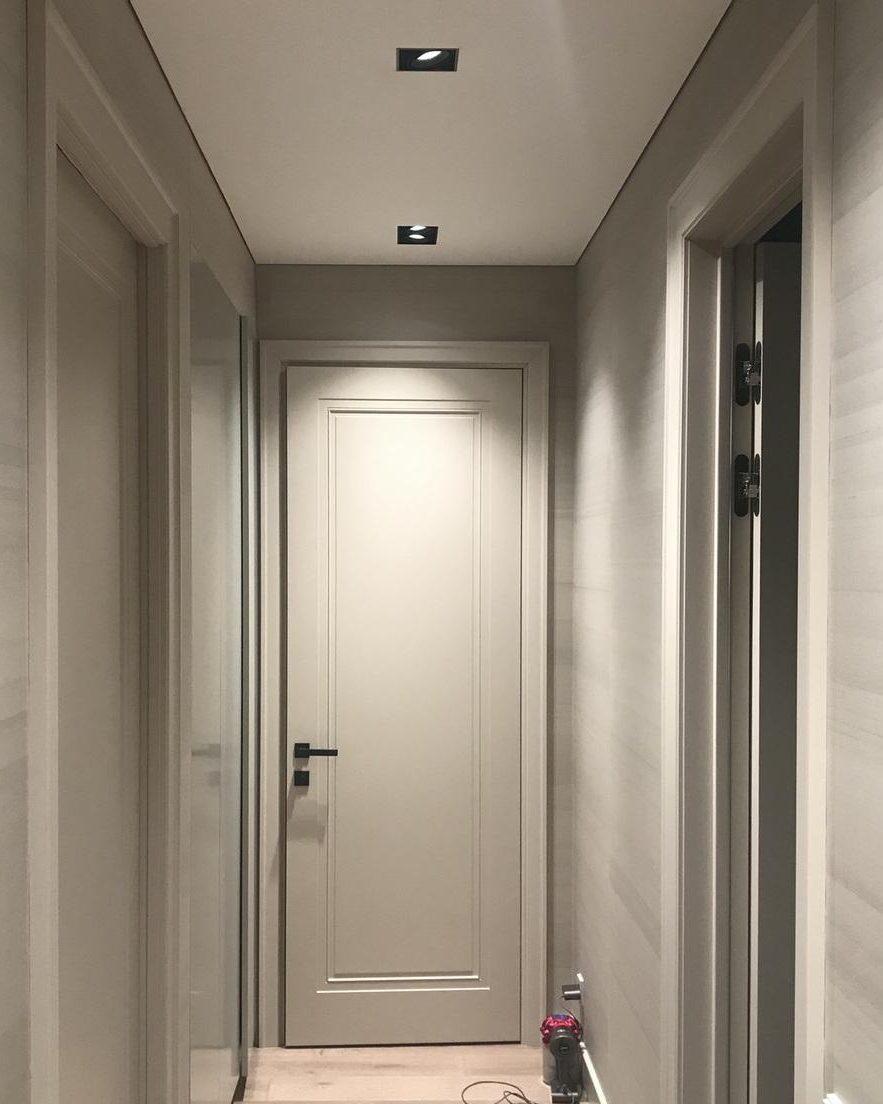
With grasscloth, it helps to be clear about which is which.
Wall Preparation
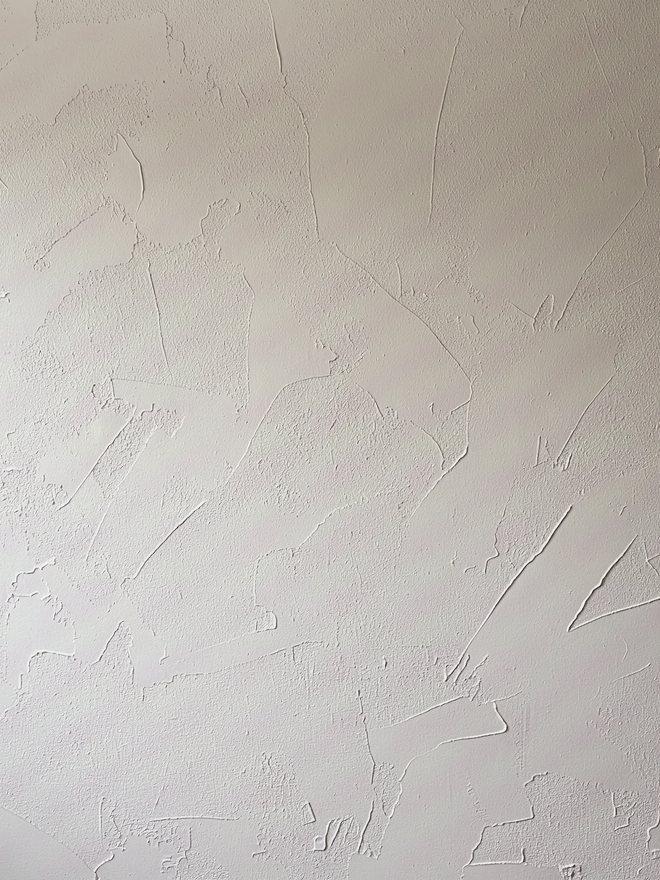
Yes, once the wall is smooth. Knockdown, orange peel, and other wall textures can show through a wallcovering. We’ll look at photos of your walls, or at the walls themselves, and tell you whether they need smoothing first.
Smoothing usually means a skim coat: a thin layer of joint compound over the whole wall, sanded smooth. The Gypsum Association grades drywall finishes in a guide called GA-214. For wallcoverings, it lists Level 4, a standard smooth drywall finish, as the base. A skim coat over the whole wall is what it calls Level 5, the smoothest level. We prepare to Level 4 or Level 5, as the material and the light call for.
The wall also has to be clean, dry, and sound. Some manufacturers set a limit on moisture in the wall itself: the Wolf-Gordon instructions for grasscloth ask for a wall moisture reading of 4 percent or less. If the instructions for your item call for a liner, it goes on before the grasscloth.
On Site
Most of the care happens before the first strip goes up.
Grasscloth goes up in a room at normal living conditions, with the heating or cooling running. One manufacturer’s grasscloth instructions, for example, ask for 60–75°F and relative humidity of 50 percent or less for at least 72 hours before, during, and after installation. Others set their own numbers, so we work from the instructions for your item.
When the material arrives, we count the rolls, check that the run or batch numbers match, look at the shading, and check for visible damage while the material can still be claimed.
The adhesive, the hanging method, and the trimming come from the manufacturer’s instructions for the item. If something in them affects the wall prep or the schedule, we tell you before we start.
We hang the first few strips and stop, so you can see the seams and the tone on your wall in daylight before we hang the rest. Some manufacturers won’t accept claims on the material once more than three strips are up, so this is the moment to look closely.
Strip by strip, in the order and layout you approved.
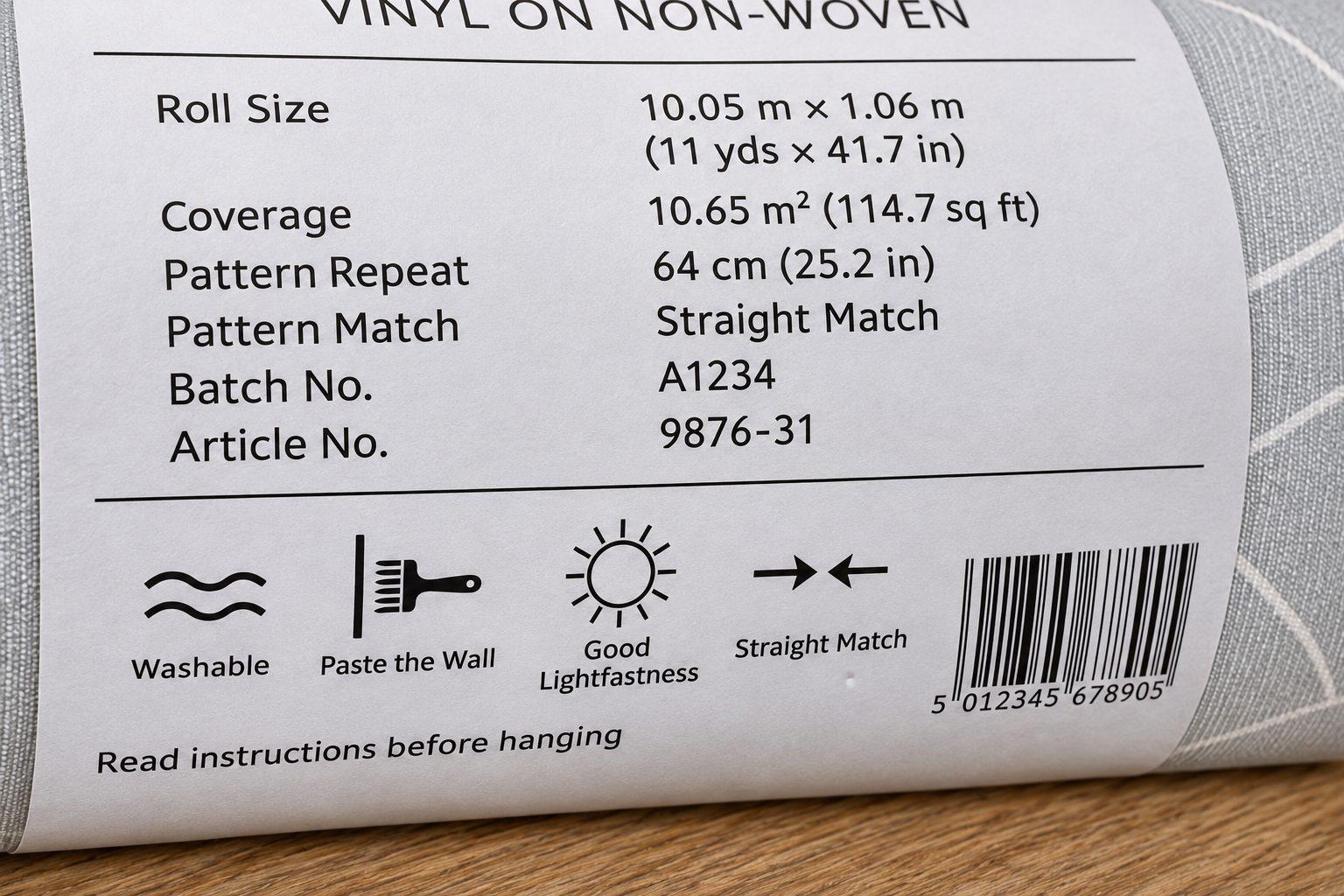
Send the spec sheet, the hanging instructions, and photos of the roll labels if the material has arrived. We’ll flag anything that affects wall prep or the schedule. We’ll walk you through the seam plan before we cut.
It helps to show your client photos of finished grasscloth seams before the order goes in, so the paneled look is expected rather than discovered.
It takes more planning than most printed papers. The seams show, and the tone can shift between strips. The instructions also change from item to item: how long the material sits in the room, which adhesive to use, and whether to reverse-hang. We settle those questions before we start.
It depends on the room and on the item. A powder room without a shower is a different setting from a bath with one. Before you order, we check the manufacturer’s guidance for the item and tell you plainly if the room and the material are a poor match.
Manufacturer and industry guidance cited on this page: Phillip Jeffries on items meant to seam · Phillip Jeffries on reverse hanging · Phillip Jeffries on dye lots · Wolf-Gordon, Wallcovering 101, on dye lots and reverse hanging · Wolf-Gordon grasscloth installation instructions · Gypsum Association, GA-214, Recommended Levels of Finish for Gypsum Panel Products.
Brand names are trademarks of their respective owners. Yule Studio Wallpaper is an independent installer and is not affiliated with or endorsed by these brands.
Send a few photos of the walls and the product details. We’ll reply with a quote or a few questions.
One clear price for the project, from photos or after an on-site estimate. Not a per-roll or per-square-foot rate. The price reflects the walls and the prep they need, the seam plan, and what the instructions for your item call for. Wall prep appears as its own line in the quote.
Fully insured. Certificate of insurance available on request.