Skip to content
Yule Studio

Wallpaper Installation

How we install wallpaper and wallcoverings

The material is your choice. Hanging it by hand, in the room you chose it for, is ours.

Yule Studio Wallpaper installs wallpaper and wallcoverings for interior designers and homeowners across the Denver metro area. An in-house team of four. The studio has worked in Denver since 2020.

Fully insured.

For interior designers:Explore the Trade Program
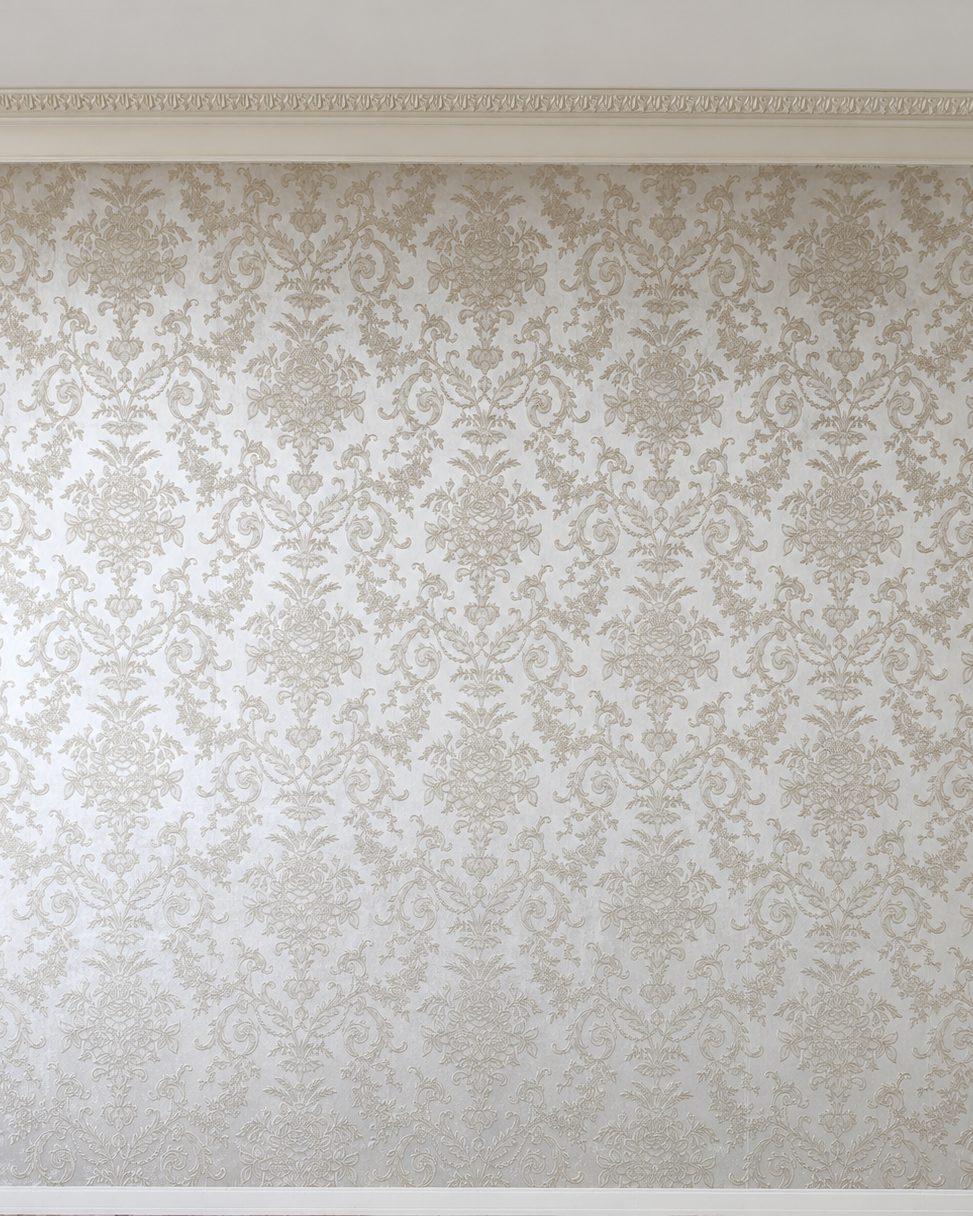
Cream damask wallcovering on a full wall beneath a carved cornice, with a white baseboard

Materials

What we install

Printed wallpapers, grasscloth, and murals, hung by hand in the rooms they were chosen for.

  • Printed wallpapers. Plain and patterned papers. On a pattern, we match it strip to strip and decide where it sits in the room.
  • Grasscloth. A natural fiber, so the seams show.
  • Murals and panoramics. One image across a set of panels, hung in order and laid out around doors and windows.
  • Vinyl and non-woven. Hung with the paste and method each maker names.
  • Silk and textile. Woven surfaces that show the wall behind them, so we prepare it first.
  • Metallic and foil. A reflective surface shows unevenness in the wall, and some makers require a liner under it.
  • Cork and mica. Natural surfaces of cork bark or mineral flakes, hung to each maker’s instructions.
  • Hand-painted panels. Painted by hand rather than printed, and hung in the sequence the maker sets.
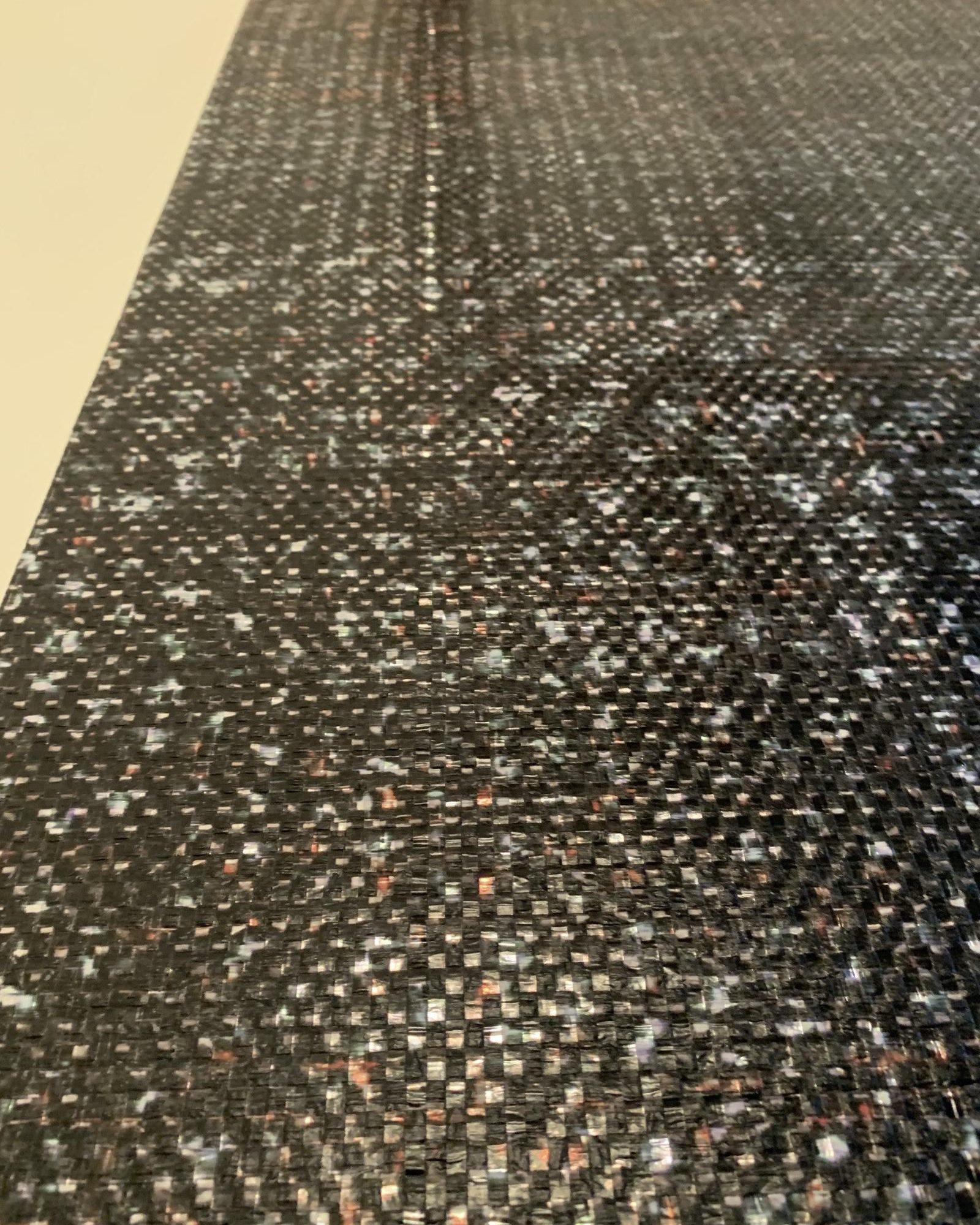
Close-up of a dark woven paper wallcovering with copper and silver foil flecks

Wall Preparation

Will my walls need preparation?

Wallpaper shows what’s under it, especially a thin paper, one with little pattern, or one with a sheen. Before we quote, we look at the walls: texture, old patches, existing paper, and how the light falls across them.

If your walls have texture, such as knockdown or orange peel, we’ll tell you whether they need smoothing first. Preparation is its own step, and the material decides how far it goes.

Seams & Pattern

Where the seams and the pattern fall

We plan where each seam falls before the first cut. On a patterned paper, that also means deciding where the pattern sits: what lands at eye level, and what it centers on in the room.

The pattern repeat is the distance down the roll from one point in the design to the same point again. Patterns match in one of three ways: straight across, as a drop match, or not at all, which is called a random match. A large repeat or a drop match can mean more rolls, because part of each strip is trimmed away to keep the pattern aligned.

With grasscloth, you’ll see where the strips meet. That’s how the material is made, and we plan where those lines fall.

We’ll walk you through the seam and layout plan, and you approve it before we cut.

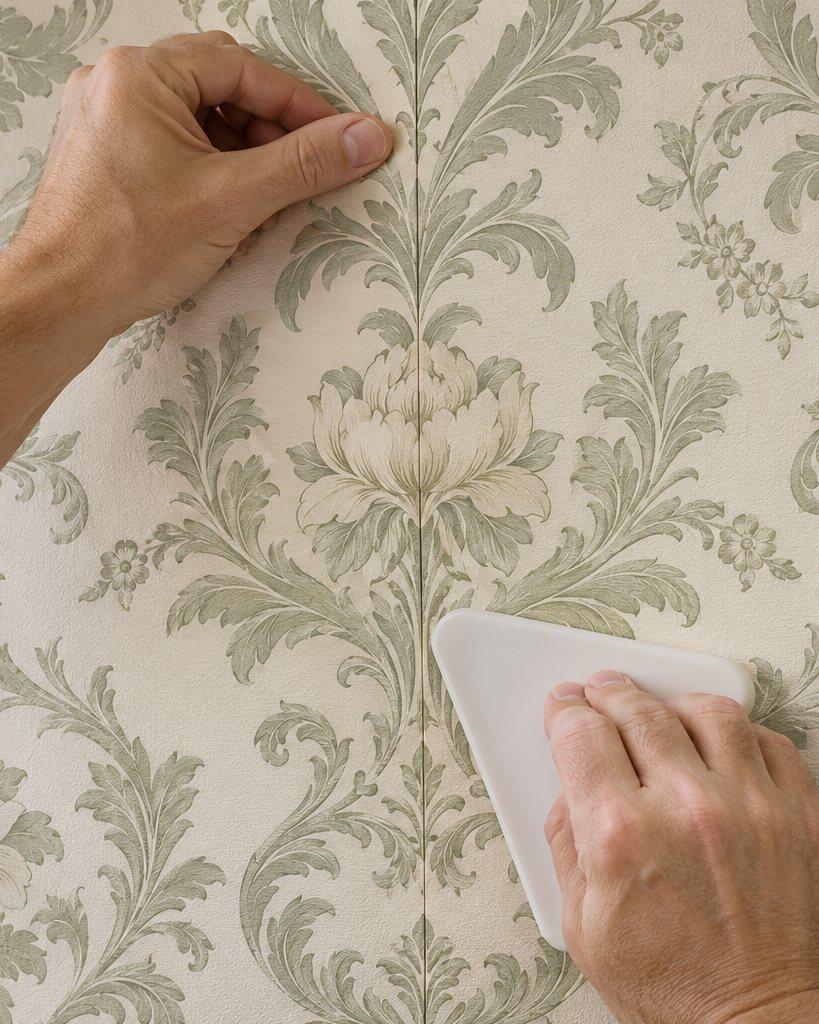
Hands matching a green damask pattern at the seam between two strips, pressing with a plastic smoother

Installation

How each material is hung

Every wallcovering comes with its own hanging instructions, and we work from the instructions for the exact item you’ve chosen.

  • Paste-the-wall or paste-the-paper. Some materials go up dry onto a pasted wall, which the US trade calls a dry hang. Others are pasted on the back first, a wet hang. The instructions say which.
  • Folding before hanging. Some pasted papers are folded onto themselves for a few minutes before hanging, which is called booking. The manufacturer sets the time.
  • Direction. With grasscloth and some other natural materials, every other strip may be hung upside down to even out shading. This is called reverse hanging.
  • Time in the room. Some manufacturers ask for the room to be kept at normal living temperature and humidity for a few days before, during, and after installation.
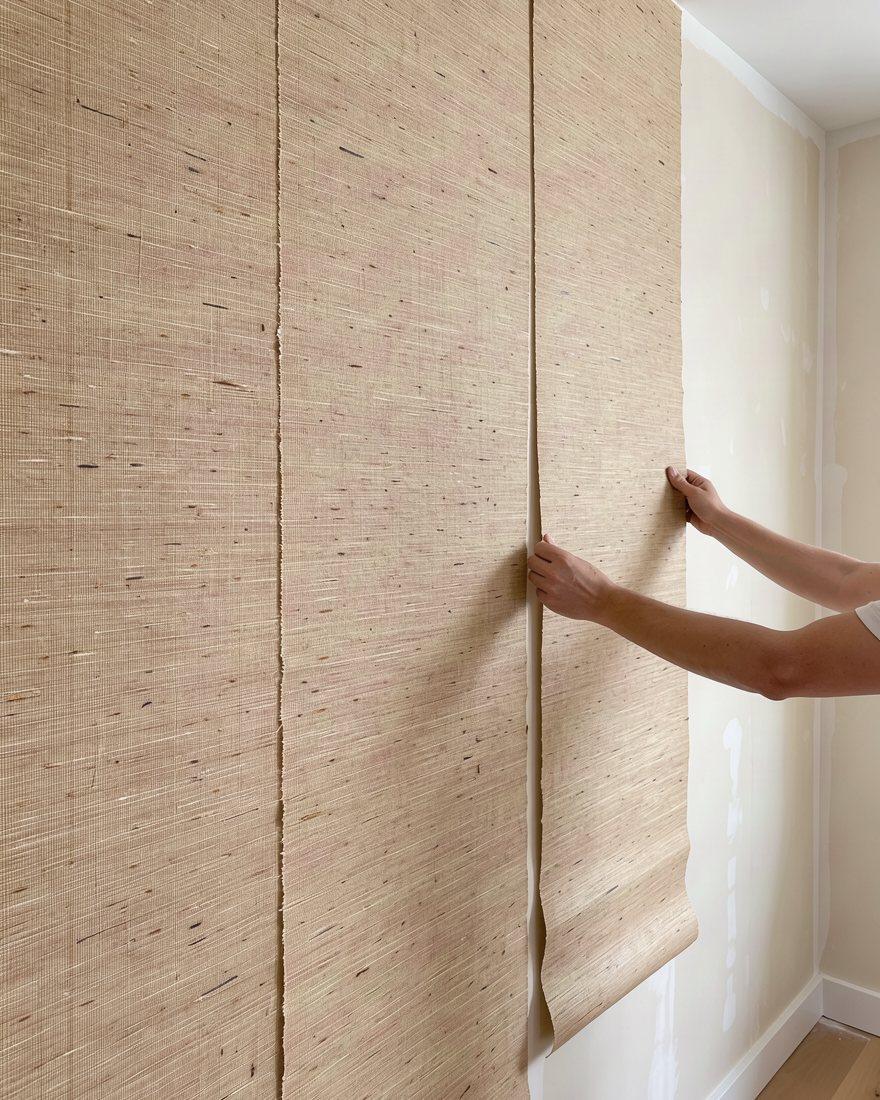
Installer hanging a strip of natural grasscloth beside two strips already on the wall

First Strips

The first strips, before the rest

Some manufacturers ask installers to stop after the first three strips, so the material can be checked on the wall before the rest goes up. Some won’t accept a claim on the material once more than three strips are hung.

Before we hang the whole room, we’ll put up the first few strips and ask you to look at them in daylight.

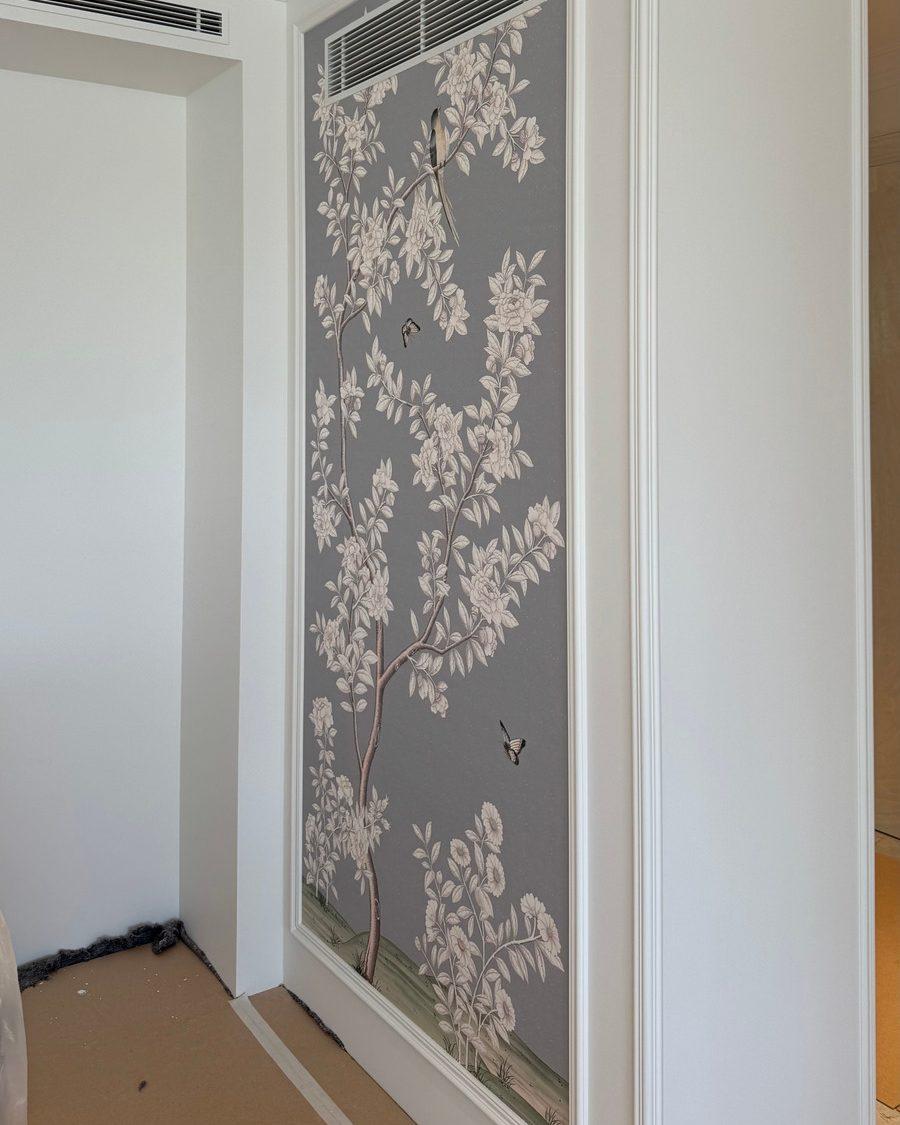
Flowering branches and birds on a gray ground in one molded frame, the rest of the wall still bare, floor under paper

Pricing

How we quote

One clear price for the project, from photos or after an on-site estimate. Not a per-roll or per-square-foot rate.

Two rooms of the same size can need very different work. The walls, the material, the pattern repeat, and the layout all play a part, so we price the whole job once we’ve seen them. Wall prep is quoted as its own line, so you can see where the cost sits.

Process

What to expect

  1. Tell us about the room and the material you’ve chosen

    Photos of the walls and the roll label help us quote without a visit.

  2. You get a quote for the whole project

  3. We prepare the walls to the finish the material calls for

  4. We hang the first strips

    We pause so you can see them on your wall before we do the rest.

  5. We hang the rest of the room

    We protect floors and furniture and clean up at the end of each day.

  6. A final walkthrough with you when the room is done.

For Interior Designers

For interior designers

  • Send the spec sheet and the manufacturer’s hanging instructions. We’ll flag anything that affects wall prep or the schedule.
  • When the rolls arrive, we check run numbers, shading, and visible defects while the material can still be claimed.
  • You approve the seam and layout plan before we cut, and we stop after the first strips for your sign-off.
  • We schedule around your timeline and the other trades on site.
  • Fully insured. Certificate of insurance available on request.

Questions

Questions about installation

How long does it take to wallpaper a room?

It depends on the walls and the material, so we give you a schedule once we’ve seen both. Several things set the pace. The walls may need smoothing first. Compound and primer need time to dry. Some materials need a few days in the room before they’re hung. Then there’s the pause after the first strips for your review.

Will the seams show on printed wallpaper?

They can, if the wall under them isn’t smooth and even. A seam sits directly on the wall, so texture, a patched joint, or a dip in the surface can show along the seam line, especially in side light. We prepare the wall and plan where each seam falls before the first strip goes up. Grasscloth is different: its seams are part of the material.

Your Project

Tell us about the room

Send photos of the walls and the details of the material you’ve chosen: the brand, the collection or pattern name, the item number or SKU, or a link to the product page. We’ll reply with a quote or a few questions.