For Designers
A trade program for interior designers
The installer is the last hand on your design. We treat it that way.
We check the material on delivery, plan the seams with you, pause after the first strips for your sign-off, and photograph the finished room.
Fully insured. Certificate of insurance available on request.
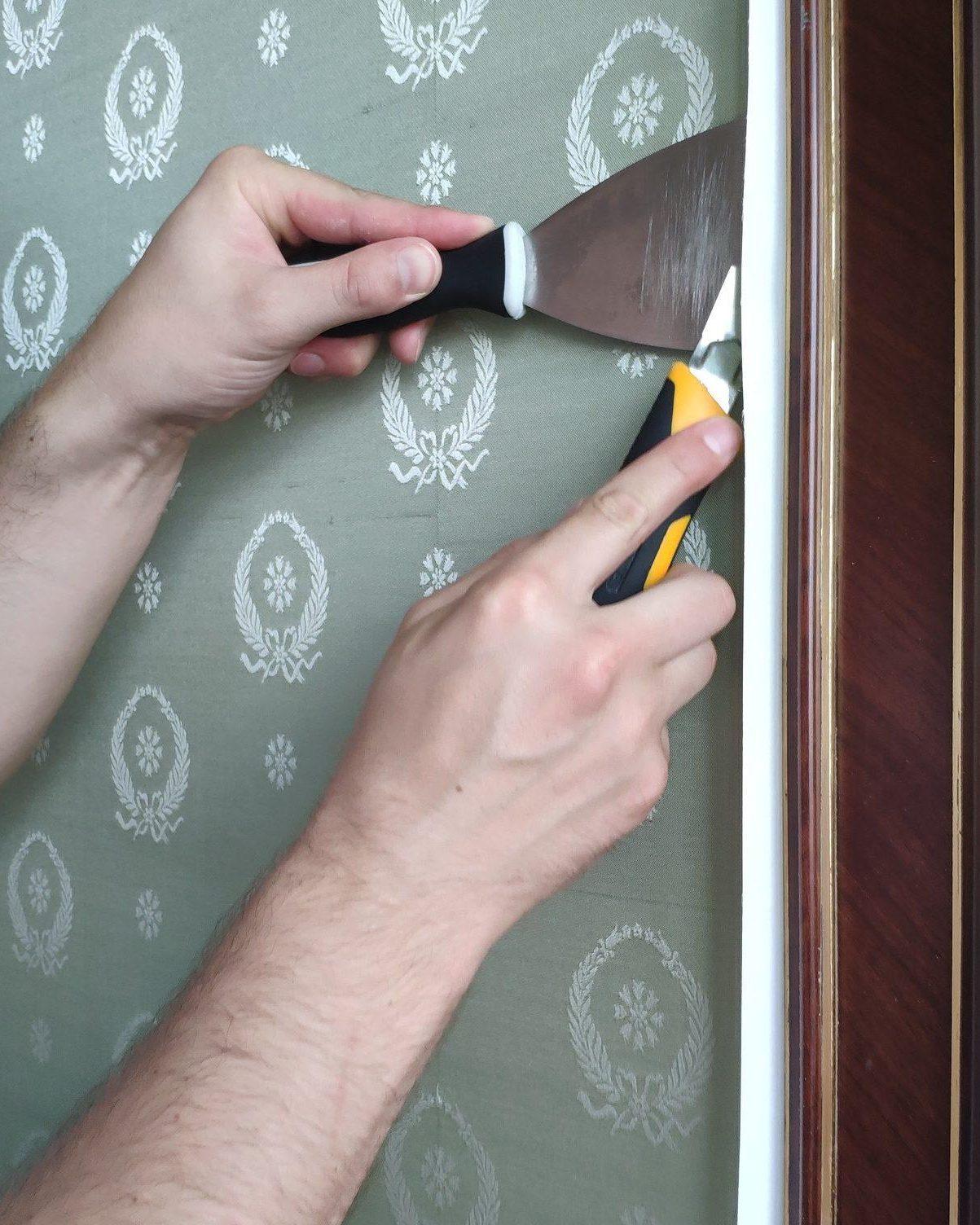
- Scheduling around your timeline and the other trades on site.
- Material inspection on delivery, inside the manufacturer’s claim window.
- A seam and layout plan you approve before we cut.
- A pause after the first strips, with your sign-off before we go on.
- Photo documentation of the finished room that you can share with your client.
- One clear price for the project, from photos or after an on-site estimate. Not a per-roll or per-square-foot rate. Wall prep is quoted as its own line, so your client can see where the cost sits.
- Questions about the job come to you, not to your client.
- Fully insured. Certificate of insurance available on request.
An in-house team of four. The studio has worked in Denver since 2020.
Process
How a trade project runs
Nine steps, from the first email to the finished room.
You send the project
The collection or pattern name, the item number or SKU, a link to the hanging instructions, the quantity, your install window, and photos of the walls. Send what you have; we’ll ask for the rest.
We look at the walls
On site or from photos: the condition of the surface, what’s underneath it, and the side light from windows that shows texture.
You get a quote
One figure for the whole project, worked out from the walls, the prep they need, and the material. Wall prep appears as its own line.
We check the material on delivery
We count the rolls or panels, check that every roll for the job carries the same run or batch number, look at the shading, and check for visible defects, inside the manufacturer’s claim window. Some manufacturers set that window in the hanging instructions, and it can start at the invoice date rather than at delivery. One manufacturer’s instructions for a single item, for example, require claims within 30 days of the invoice date. They allow no labor claims at any time.
You approve the layout
Seam positions, the center of the pattern, and the panel sequence, set out for you to approve before we cut.
We prepare the walls
To the finish the material calls for: Level 4, a standard smooth drywall finish, for most wallcoverings, or Level 5, a skim coat over the whole wall, when the material or the light requires it. Then the primer or liner the instructions specify.
You see the first strips
We hang the first strips as the item’s instructions direct, then stop for your sign-off in writing before we go on.
Why we stop after the first stripsWe hang the room
In the order and layout you approved, around the other trades’ dates.
Final walkthrough and photos
We walk the room with you and send a photo record you can pass to your client.


The First Strips
Why we stop after the first strips
In a help center article, Phillip Jeffries explains the pause: stopping after three strips lets you evaluate how the product performs once it’s on the wall. The same article spells out the limit: the company doesn’t offer returns or refunds once more than three strips are installed.
Other manufacturers draw a similar line. The Wolf-Gordon vinyl instructions say the company can’t accept claims on labor or material once more than three lengths are installed. The Schumacher hanging instructions recommend a test installation of at least three strips, applied three days before the main installation, when there are questions about the surface. They allow no claims for more than three strips on the wall.
That makes the pause the moment to look closely. You, and your client if you’d like, can check the seams, the tone, and the texture in the room’s own light while a claim is still possible.
We stop after the first strips, as the item’s instructions direct, and go on only with your written sign-off. A reply by email is enough.
The number of strips comes from the instructions for your item. Where they ask for something different, we follow them.
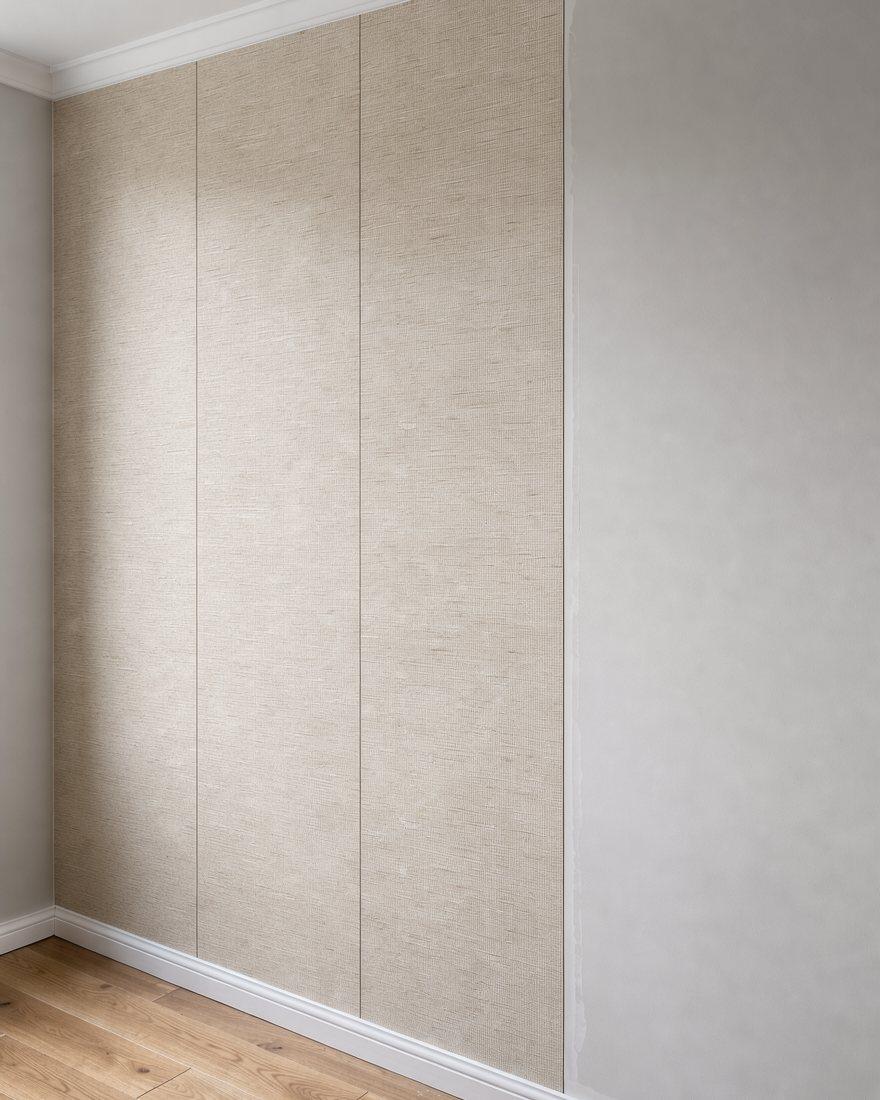
Coordination
Working with you, your client, and the other trades
- Before you order. Send the spec sheet and the hanging instructions. We’ll flag anything that affects wall prep or the schedule. If you send the room sizes before ordering, we’ll check the roll count.
- On the schedule. Some manufacturers ask for the room to be kept at normal living temperature and humidity for days before, during, and after installation. The room needs to be closed in and at temperature before we start. Tell us your install window and the other trades’ dates, and we’ll plan the prep, the time the material needs in the room, and the hanging around them.
- With your client. Questions about the job come to you, not to your client. On the intake form, a project name or code is enough. You don’t need to share your client’s name.
- On site. Fully insured. Certificate of insurance available on request. If the building needs a certificate before work starts, tell us when you send the project.
Pricing
Is there a trade discount?
If you searched for a trade program, you may have expected trade pricing. In the wallcovering business, those programs usually come from the brands and showrooms that sell the material, and the discount applies to the material.
Yule Studio doesn’t sell wallcoverings. We install the material you specify, so our Trade Program is about how the installation runs for you: the checks, the sign-offs, and the paperwork described above.
Here’s how pricing works for now: each project gets its own quote, as described above.
Terms
Trade terms
- Insurance. Fully insured. Certificate of insurance available on request.
- Pricing. One price per project.
Questions designers ask
What should I ask a wallpaper installer?
Ask how they prepare walls for the material you’ve chosen and how they plan the seams. Ask whether they check the material on delivery and stop after the first strips. And ask for a certificate of insurance. Good answers are specific about the wall and the process.
More answers: How long does it take to wallpaper a room? · Before you order wallpaper: what your installer needs
Architects, builders, and general contractors
The same process applies when you’re the architect or the builder on the job.
We also take on commercial interiors by project and install them to manufacturer and project specifications.
Serving Denver, Cherry Creek, DTC, Aurora, Lakewood, Englewood, Littleton, Highlands Ranch, Castle Pines, and Castle Rock.
Fully insured. Certificate of insurance available on request.
Manufacturer instructions cited on this page: Phillip Jeffries on pausing after three strips (https://support.phillipjeffries.com/en/articles/11056820-why-should-i-pause-after-hanging-3-strips) · Phillip Jeffries hanging instructions for one item, with the claim window (https://api.phillipjeffries.com/files/instructions/Adobe%20Hanging%20Instructions.pdf) · Wolf-Gordon vinyl installation instructions (https://cdn2.wolfgordon.com/production/documents/Vinyl_Install.pdf) · Schumacher hanging instructions (https://schumacher.com/hanging-instructions).
Brand names are trademarks of their respective owners. Yule Studio Wallpaper is an independent installer and is not affiliated with or endorsed by these brands.