Wall Preparation
Can you wallpaper over knockdown and other textured walls?
By Yule Studio Wallpaper
Yes, once the wall is ready for it. Knockdown, orange peel, and other wall textures can show through wallpaper, and light falling across the wall makes them easier to see. The usual answer is a skim coat: a thin layer of joint compound over the entire wall, sanded smooth, then primed. The hanging instructions for your wallpaper say how to prime and whether a liner goes on first.
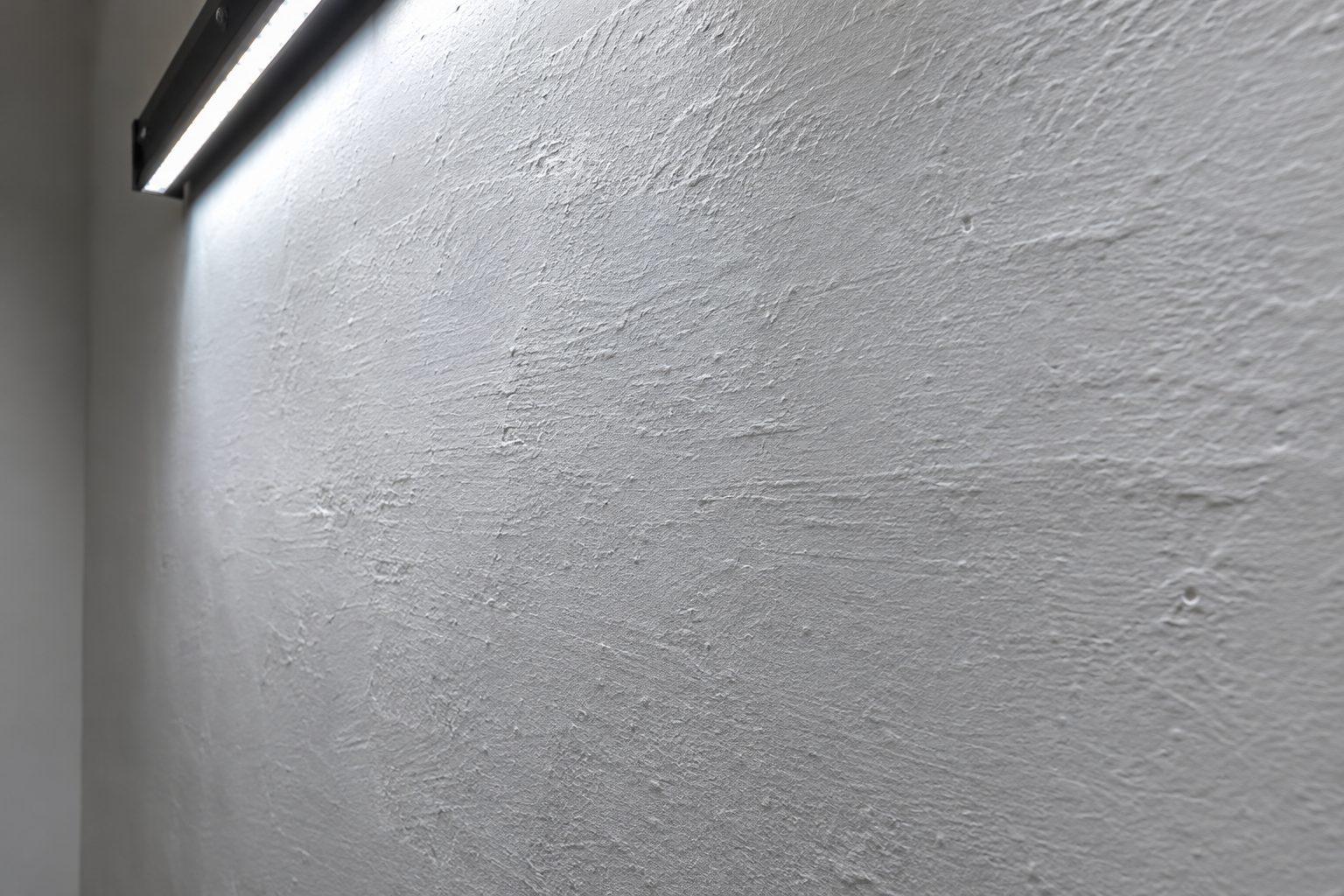
Why texture shows through wallpaper
Wallpaper follows the surface under it. Raised texture, an old patch, or a drywall joint can read through the paper, and light raking across the wall makes it stand out.
Manufacturers say the same thing in their own terms. The Wolf-Gordon instructions for vinyl wallcoverings prefer the smoothest drywall finish “to avoid telegraphing of any imperfections,” the trade’s word for flaws showing through. Phillip Jeffries notes that with a metallic sheen, “any imperfections in the wall show through the face of the paper.”
Some papers ask more of the wall than others. GA-214, the Gypsum Association guide to drywall finish levels, says joints and fasteners must be “adequately concealed” when a wallcovering is lightweight, has little pattern, or has a sheen other than flat. A thin, quiet, or glossy paper shows more of what’s behind it than a heavy, busy one.
What a skim coat does
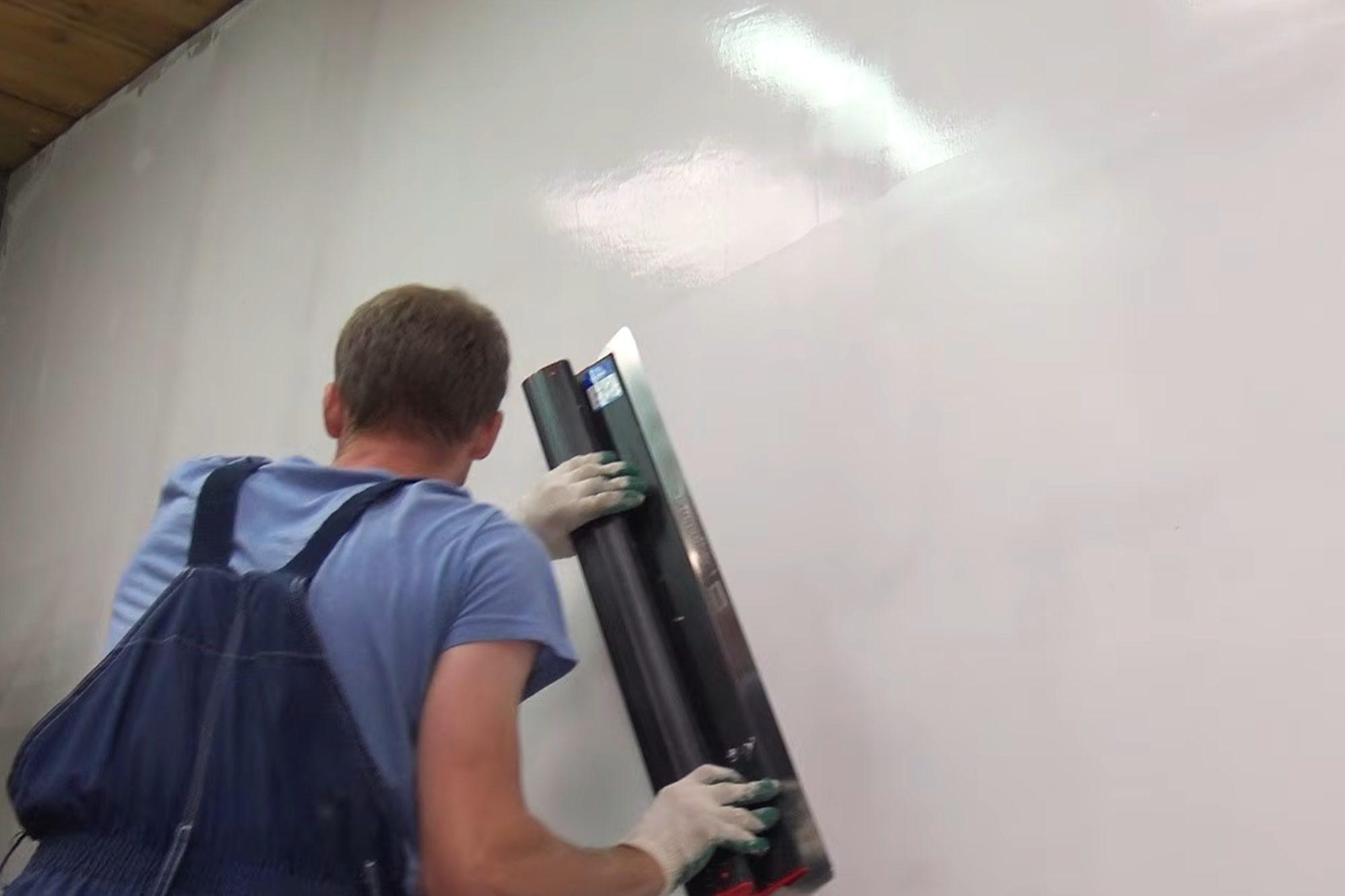
A skim coat is a thin layer of joint compound spread over the whole wall, then sanded smooth. It covers knockdown, orange peel, and old patches, and it leaves one even surface for the paper.
The drywall trade calls this a Level 5 finish. GA-214 grades drywall by level of finish. Level 4 is the standard finish, and Level 5 adds a skim coat over the entire surface on top of it. The guide calls that “the most effective method to provide a uniform surface.”
For wallcoverings, GA-214 points to Level 4 as the base. It typically specifies Level 5 under paint with a sheen or a deep tone, and where there are what it calls “critical lighting conditions.” It doesn’t address wallcoverings at Level 5 directly.
GA-214 is mainly about finishing new drywall. On an existing wall with knockdown, the goal is the same: one smooth, uniform surface from corner to corner. How far the preparation goes depends on the paper and the light. The Wolf-Gordon vinyl instructions, for example, ask for Level 4 on new drywall and call Level 5 “preferred.”
After the skim coat comes the primer the wallpaper’s instructions call for. One maker’s help center, for example, recommends “a hard acrylic pigmented primer made for wallcovering installation,” and notes that some collections call for a different one.
Skim coat or liner?
A liner is a plain paper hung on the wall before the wallcovering. Some manufacturers require a liner; others don’t. We follow the instructions for your product.
Phillip Jeffries notes that “lining paper is not a necessity with most wallpaper collections,” though it “tends to be mandatory for products with a metallic sheen.” Other makers require a liner on every wall. The de Gournay instructions, for example, call for all walls to be lined with plain white lining paper, and they say not to use a primer on top of it.
Over knockdown, we smooth the wall first and add a liner only when the material calls for one.
What about peel-and-stick?
Removable, peel-and-stick papers set their own surface rules. Tempaper, for one, lists textured surfaces as not recommended and asks for smooth walls, primed and painted in a satin or semi-gloss finish. Read that part of the instructions before you buy.
Grasscloth and other natural wallcoverings work the same way: the instructions decide the surface. Read about grasscloth installation
How to check your walls
- Look at the wall in side light. Hold a flashlight flat against the wall and shine it across the surface. It shows texture, ridges, and patches that are easy to miss.
- Note what’s on the wall now. Paint, texture, old wallpaper, or a mix. Each one changes the preparation.
- Find the instructions for your paper. Read the wall preparation section before you order, not after the rolls arrive.
When to call an installer
Ideally, before the wallpaper is ordered. The preparation a material calls for affects both the quote and the schedule. It’s easier to plan for it than to discover it with the rolls already on site.
Yule Studio Wallpaper prepares walls and hangs wallcoverings across the Denver metro area. If you’re not sure what’s on your walls, send a few photos and a link to the paper you’re considering. We’ll tell you what we see and what it means for your wallpaper. You’ll get one clear price for the project, from photos or after an on-site estimate. Wall preparation appears as its own line in the quote.
Sources
- Gypsum Association, GA-214, Recommended Levels of Finish for Gypsum Panel Products, quick reference guide (2022): https://gypsumpublications.com/product/recommended-levels-of-finish-for-gypsum-panel-products-quick-reference-guide-pdf-download-ga-214-2022-qrg/
- Wolf-Gordon, vinyl wallcovering installation instructions: https://cdn2.wolfgordon.com/production/documents/Vinyl_Install.pdf
- Phillip Jeffries Help Center, lining paper: https://support.phillipjeffries.com/en/articles/11056901-should-i-use-lining-paper
- Phillip Jeffries Help Center, recommended adhesives and primer: https://support.phillipjeffries.com/en/articles/11056892-what-adhesives-are-recommended
- de Gournay, hanging instructions (2026): https://degournay.com/uploads/technical/document/2026_Hanging_Instructions-After-2025.pdf
- Tempaper, installation guide: https://tempaper.com/pages/how-to-install-wallpaper
This article is general information. Always follow the manufacturer’s instructions for your specific product.
Brand names are trademarks of their respective owners. Yule Studio Wallpaper is an independent installer and is not affiliated with or endorsed by these brands.