For Designers
Before you order wallpaper: what your installer needs
By Yule Studio Wallpaper
Before you place the order, send your installer the exact item and its hanging instructions, the pattern repeat and match, and photos and rough measurements of the walls. When the rolls arrive, check every label against the order and report any problem inside the manufacturer’s claim window. Some windows run from the invoice date, not the delivery date, and some manufacturers accept no claims once more than three strips are on the wall.
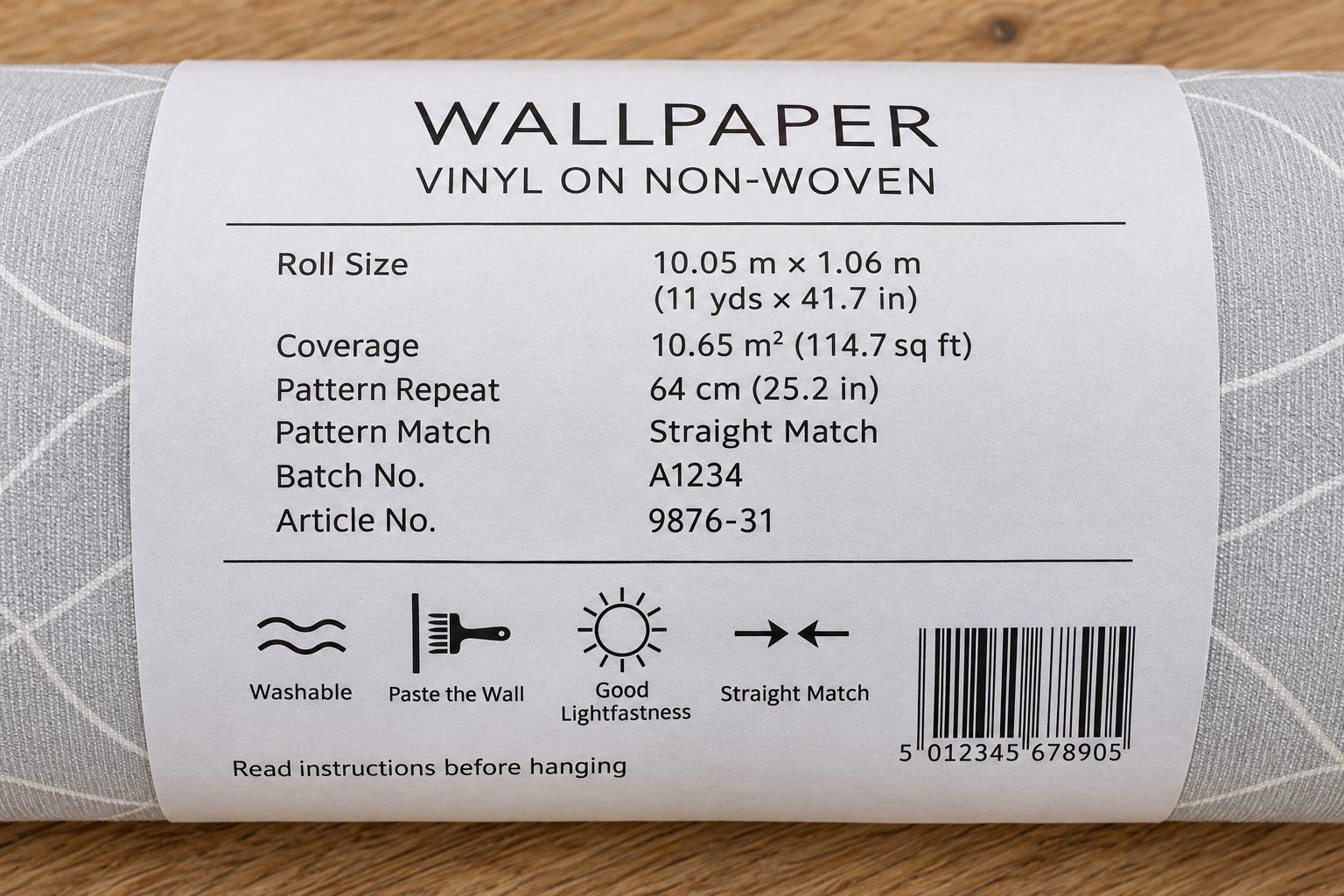
The exact item and its hanging instructions
Send the brand, collection, pattern name, colorway, and item number, sometimes called the SKU, with a link to the product page. Then get the hanging instructions for that exact item from the supplier or the manufacturer’s site. One manufacturer, for example, keeps a searchable page of instructions listed by product name.
The instructions answer questions that change the quote and the schedule:
- How the wall should be prepared and primed.
- Whether the adhesive goes on the wall or on the back of each strip. The trade calls these a dry hang and a wet hang, or paste-the-wall and paste-the-paper.
- Whether a liner is required. Some manufacturers require one; others don’t. Phillip Jeffries notes that a liner “tends to be mandatory for products with a metallic sheen,” and the de Gournay instructions call for lining every wall.
- How long the room should hold normal living conditions. Some instructions ask for the heating and cooling to run as in an occupied building for three days before installation, throughout it, and for three days after.
Send the spec sheet and the instructions together. We’ll flag anything in them that changes the quote or the schedule.
Pattern repeat and match
The pattern repeat is the distance down the roll from one point in the design to the same point again. The match describes how neighboring strips line up:
- Straight match. The design lines up across the seam at the same height, so every strip starts at the same point at the ceiling.
- Drop match. The design steps down from one strip to the next. In a half drop, each strip is shifted down by half the repeat, so every other strip starts at the same point.
- Random match, also called a free match. There’s no match point, so strips can go up in any position. Stripes, textures, and grasscloth are common examples.
A large repeat or a drop match can mean more rolls, because part of each strip is trimmed away to keep the pattern aligned. A random match usually wastes the least. The repeat and the match are listed in the product specifications. Your installer needs them, along with the roll width and length, to check how many rolls the room takes.
The roll labels
Roll labels usually show the item number and a run, batch, or dye lot number. Brands use different names for the same thing: a set of rolls produced together. Rolls from different runs can differ slightly in color, sometimes only when they are laid side by side, so every roll for the job should carry the same run number.
If more material is needed later, the same run may no longer be available. Keep one label, or a clear photo of it, and send it to your installer.
Photos and measurements of the walls
- A wide photo of each wall, taken straight on
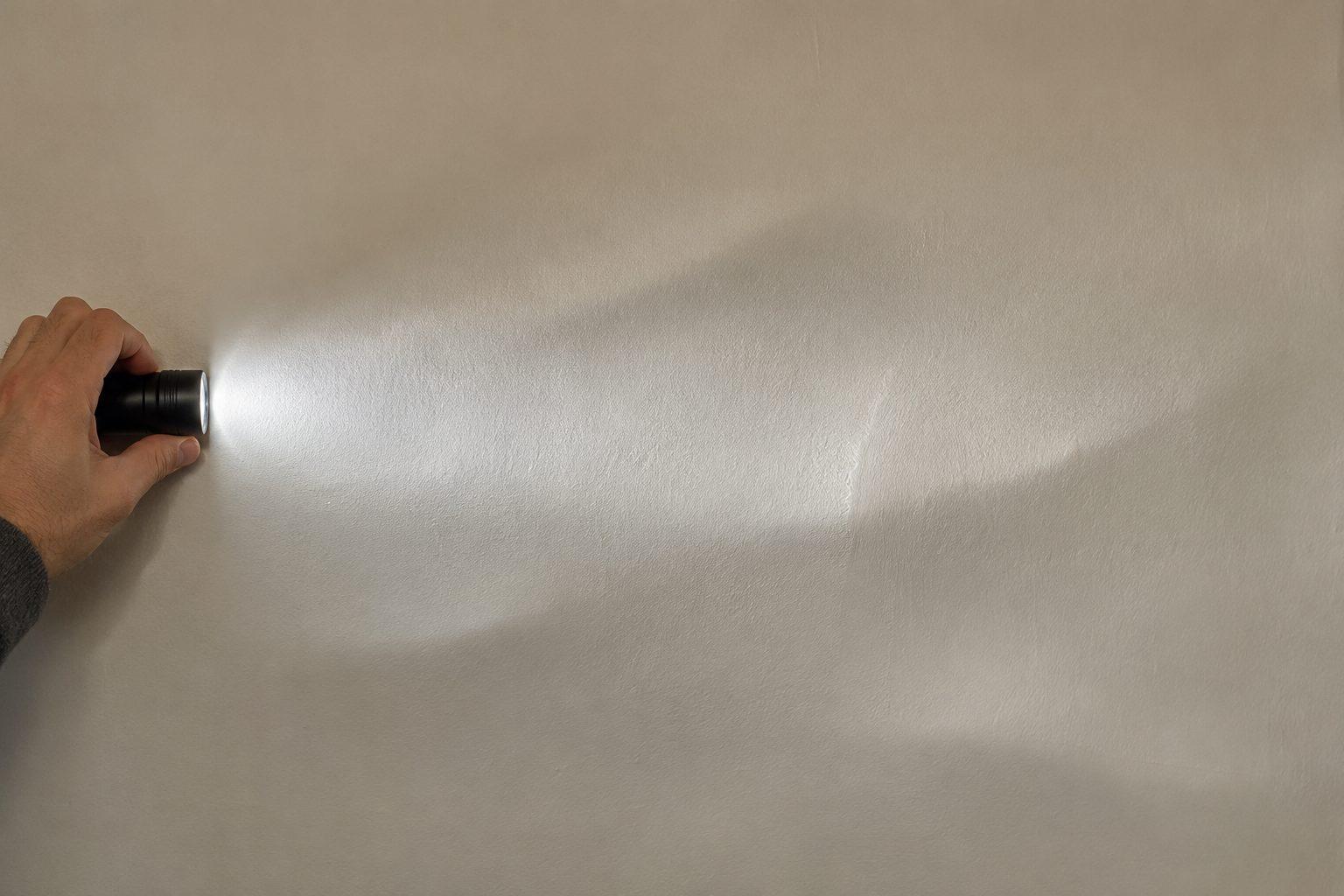
- A close-up of the surface, lit by a flashlight held flat to the wall
- Rough wall widths and the ceiling height
- Doors, windows, outlets, and built-ins on those walls
- What’s on the walls now: paint, texture, old wallpaper, or a mix
Side light shows texture that’s easy to miss in an ordinary photo. Rough numbers are fine. If the walls have knockdown or another texture, read Can you wallpaper over knockdown and other textured walls?
How many rolls to order
No single figure for extra rolls suits every room. The margin manufacturers suggest varies by brand and by pattern, and many ask that an installer work out the count. Extra material allows for trimming, mistakes, and matching the pattern from strip to strip. Large repeats and drop matches can call for more.
Start with the manufacturer’s guidance on extra rolls, if it gives any. Then have your installer check the count against the walls, the repeat, and the roll size before you buy. Send it to us before you order, and we’ll check the roll count.
A few things to check before you place the order:
- Whether the quantity is counted in single rolls or double rolls.
- The return policy. Some brands don’t take back extra material, and returns are often limited to unopened rolls.
- That the order covers the whole job. A top-up order later may come from a different run, or may not be available.
When the rolls arrive
Open the boxes when they arrive, or have your installer do it. If we’re on site when the rolls arrive, we check them then. Either way, we check every roll before the first cut.
- Count the rolls against the order
- Check that every label shows the same item number and the same run or batch number
- Look for damage to the boxes, the roll ends, and the edges
- Store the rolls as the instructions say, in a room at normal living conditions
Then note the claim window. The Phillip Jeffries instructions for one item, for example, state that “all claims must be made within 30 days of the invoice date.” They allow no claims once more than three strips are on the wall, and no labor claims at any time. That clock starts with the invoice, not the delivery, so a late shipment leaves less time. The Wolf-Gordon vinyl instructions likewise accept no claims on labor or material once more than three lengths are installed.
That’s why the first few strips are a checkpoint. We hang the first few strips and stop for your sign-off before we go on. For grasscloth and other natural materials, see why grasscloth seams show.
The right time to talk to an installer
Before you order. A short exchange at this stage settles the roll count, the wall preparation, and the dates, while every choice is still open.
At Yule Studio Wallpaper, we work with interior designers and homeowners throughout the Denver metro area. Send what you have, and we’ll ask for the rest. The quote is one price for the whole project, not a per-roll or per-square-foot rate. Photos are often enough to quote from; some rooms need an on-site estimate first.
Sources
- Phillip Jeffries, hanging instructions by product: https://www.phillipjeffries.com/hanging-instructions
- Phillip Jeffries, example product instructions with claim terms and room conditions: https://api.phillipjeffries.com/files/instructions/Adobe%20Hanging%20Instructions.pdf
- Phillip Jeffries Help Center, wet hang and dry hang: https://support.phillipjeffries.com/en/articles/11056803-what-s-the-difference-between-a-wet-hang-and-a-dry-hang
- Phillip Jeffries Help Center, lining paper: https://support.phillipjeffries.com/en/articles/11056901-should-i-use-lining-paper
- Phillip Jeffries Help Center, dye lots: https://support.phillipjeffries.com/en/articles/11056751-what-are-dye-lots
- Phillip Jeffries Help Center, estimating how much product you need: https://support.phillipjeffries.com/en/articles/11056818-how-do-i-estimate-how-much-product-i-will-need
- Phillip Jeffries, terms of sale (returns of extra material): https://www.phillipjeffries.com/terms
- de Gournay, hanging instructions (2026): https://degournay.com/uploads/technical/document/2026_Hanging_Instructions-After-2025.pdf
- Wolf-Gordon, vinyl wallcovering installation instructions: https://cdn2.wolfgordon.com/production/documents/Vinyl_Install.pdf
- Wolf-Gordon, Wallcovering 101 (dye lots and pattern matches): https://www.wolfgordon.com/resources/wallcovering-101
- Brewster, wallpaper glossary (run numbers, match types, double rolls): https://www.brewsterwallcovering.com/wallpaper-glossary
- York Wallcoverings, installation guide (pattern match types): https://yorkwallcoverings.com/pages/installation-guide
This article is general information. Always follow the manufacturer’s instructions for your specific product.
Brand names are trademarks of their respective owners. Yule Studio Wallpaper is an independent installer and is not affiliated with or endorsed by these brands.